

A Middle Tennessee lawmaker says he believes the shooter at a Chattanooga recruiting center was not a “lone wolf.”
He’s calling on Tennessee to test out a new law that lets courts take the assets of organizations that assist or support terrorists.
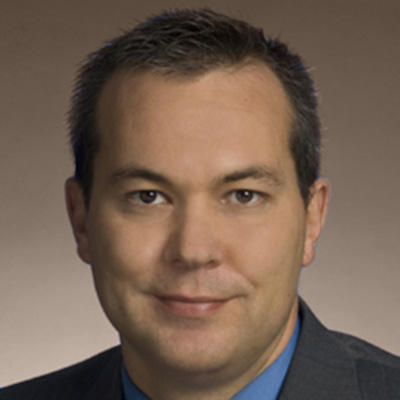
State Rep. Judd Matheny laid out his thoughts in an op-ed sent to state media outlets. The Tullahoma Republican writes that he believes Chattanooga shooter Mohammad Youssuf Abdulazeez did not act alone, and he calls for the state to impose civil penalties on anyone who “recruited, assisted, incited or supported” Abdulazeez.
Investigators are still trying to determine Abdulazeez’s motive and whether he had any help, but Matheny cites a 2009 shooting at a recruitment center in Little Rock, Ark., as proof last week’s attack was not random. He notes that the shooter in that case, Carlos Bledsoe, was originally from Memphis and had at some point visited a Nashville mosque.
The Little Rock shooting prompted Tennessee and other states to pass new laws giving local authorities the power to take the property of anyone deemed to have been involved in a terrorist attack. Matheny was a sponsor of Tennessee’s measure.
Muslim groups oppose the law. They say it invites authorities to harass or retaliate against innocent people — like family, friends or a mosque whose only connection to a terrorist was that he had prayed there.
In his piece, Matheny does not name anyone who he believes provided support to Abdulazeez.
But he says state leaders have “skirted around” terrorism issues, and he says the shooting should lead to changes in federal policy, particularly as they relate to immigration, refugee resettlement and threats to free speech.
Read Matheny’s complete op-ed below:
I extend my sincerest condolences to the families of our servicemen whose lives were taken in a horrific act of planned terrorism. Having served both in the military and as a law enforcement officer in Tennessee, I have a deep and abiding gratitude and respect for anyone who chooses to serve in uniform.
Acts of terrorism are intended to make us feel powerless to respond. Tennessee has again witnessed the reality that our state is not immune from these acts of cowardice.
We first learned this lesson in 2009 when Carlos Bledsoe, a Tennessee State University student from Memphis, shot and killed Pvt. Andrew Long at the Little Rock, Arkansas Army recruiting center. With further investigation, we learned that between his days as a student and the day he became a murderer, Carlos began attending meetings at the Nashville Islamic Center, changed his name to Abdulhakim Mohammed, and spent several months in Yemen, a known terrorist training location.
It is now clear that Carlos Bledsoe’s murderous actions were not a random act or as often excused, that of a “lone wolf”. In response to those findings and to possibly stop future Carlos Bledsoes, Senator Bill Ketron and I led the General Assembly in passing a law in 2011, enhancing the criminal punishment for acts of terrorism, including jihadi terrorism, by both the perpetrators and the supporters of the violence.
Earlier this year, we realized that more needed to be done. We passed another law, known familiarly as “Andy’s Law”, named for Pvt. Andrew Long, the soldier Carlos Bledsoe murdered. This new law addresses the very situation we are now facing in Chattanooga. While the jihadist responsible for the murders is dead and cannot be prosecuted, under this new law, all individuals and all organizations who recruited, assisted, incited, or in any way supported Mohammed Youssef Abdulazeez in his jihad, are subject to vastly more severe civil penalties on the state level.
Jihadi terrorism is neither a random act nor a result of “lone wolf” perpetrators. We must use every option that we now have and those that we will devise in the future to protect ourselves from the simmering violence that is brewing in Tennessee’s communities.
Most of our state’s top leadership have skirted around the issues of security from terrorism in Tennessee. We can no longer ignore the security implications hidden in legal immigration issues, federal threats to free speech, refugee resettlement issues, indirect support of the Obama administration’s blind eye to burgeoning illegal immigrant traffic, and attempts to pass state laws equalizing rights and state benefits for illegal inhabitants in Tennessee to those of legal inhabitants.


 On Air - 90.3 WPLN-FM